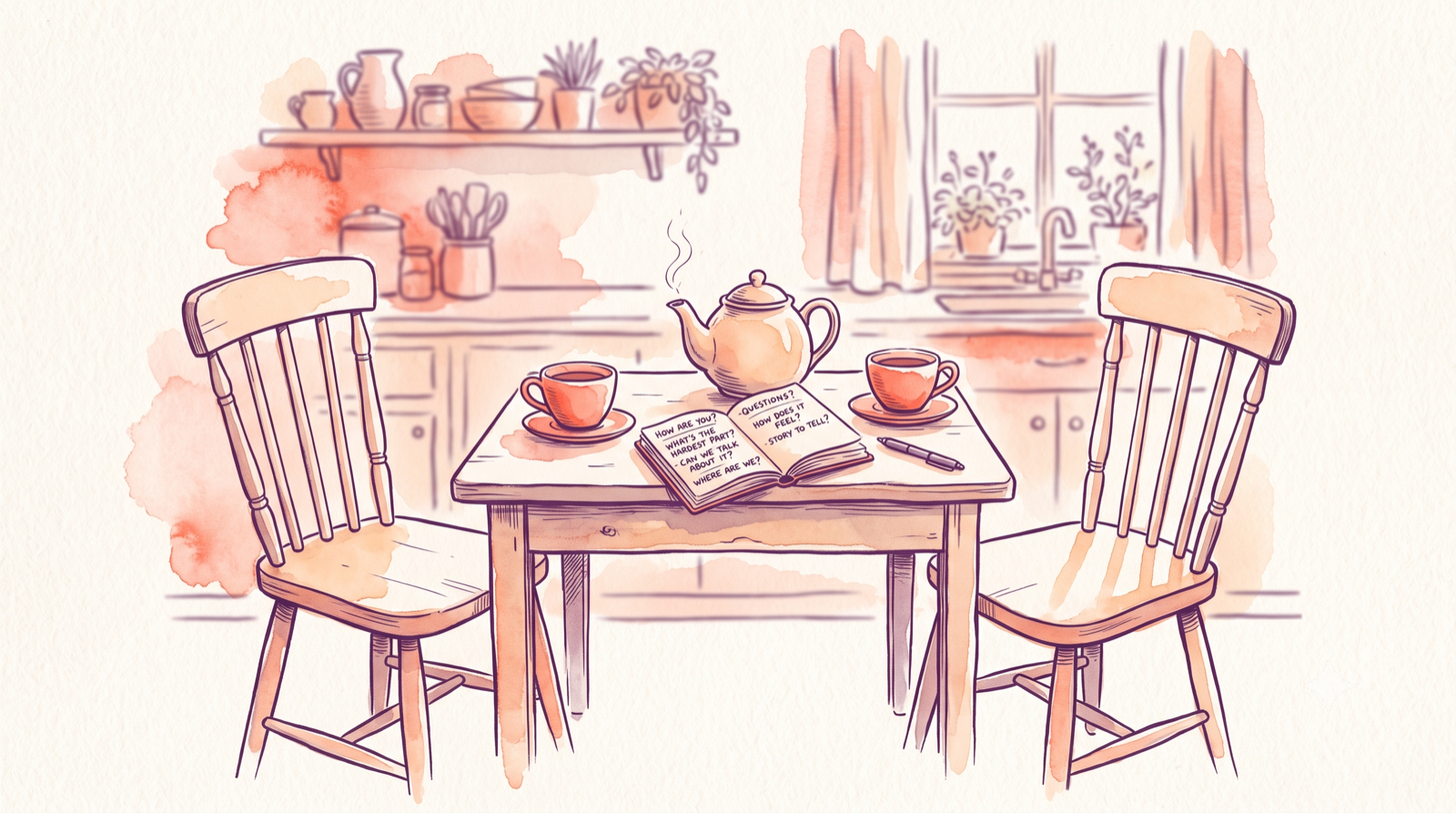
Every family has a historian — usually without knowing it. The relative who remembers the names, the dates, the story of how the family got from there to here. A family history interview is how you capture all of that before it fades, in their own words and their own voice.
This guide gives you the questions to ask — grouped by theme — plus the practical part most lists skip: how to actually conduct the interview so you come away with something worth keeping.
Before you start: how to run a good interview
A great oral history interview is a conversation, not an interrogation. A little preparation makes all the difference:
- Pick one person and one session at a time. An hour is plenty; you can always do more.
- Record it. Don't rely on notes — you'll want their voice. Your phone works, or use a tool like Memory Sparks to build your question list and record the answers in one place.
- Start easy. Open with warm, simple questions (childhood, names) before the deeper ones.
- Ask open questions. "What was that like?" beats "Did you like it?" — invite a story, not a yes/no.
- Let silences breathe. The best memories often arrive after a pause. Don't rush to fill it.
- Follow the thread. If something lights them up, keep pulling on it — your list is a guide, not a script.
The questions
Family origins & ancestry
- What's your full name, and were you named after someone?
- Where and when were you born?
- What do you know about where our family originally came from?
- What were your parents' and grandparents' names and occupations?
- How did your parents and grandparents meet?
- Did the family ever move countries, cities, or homes — and why?
- What languages or dialects were spoken in the family?
- Are there family heirlooms, and what are their stories?
- What family names or traditions have been passed down the generations?
- Is there a family mystery or story no one's quite sure about?
Childhood & home life
- What was your childhood home like?
- What did a typical day look like when you were young?
- What chores and responsibilities did you have?
- What did your family do together for fun?
- What foods and meals defined your childhood?
- What holidays or celebrations mattered most?
Work, school & daily life
- What was school like for you?
- What was your first job, and how did you get it?
- What work did you do over your life?
- How did people in your community earn a living back then?
- How did you get around — transport, travel, daily journeys?
- What did things cost, and how did people manage money?
The times they lived through
- What major historical events do you remember living through?
- Where were you during a moment everyone remembers?
- How did world events affect your family directly?
- What inventions or technologies changed daily life the most?
- What social changes did you witness over your lifetime?
- What do you remember about wartime, hardship, or times of crisis?
Relationships & community
- How did you meet your partner, and what was courtship like?
- What was your wedding or commitment like?
- Who were your closest friends, and what did you do together?
- What role did faith, church, or community play in family life?
- Who were the memorable characters in your neighborhood?
Reflection & legacy
- What are you most proud of?
- What's the most important lesson life has taught you?
- What do you hope future generations remember about our family?
- What values do you most want passed down?
- Is there anything you've never told the family that you'd like recorded?
After the interview: don't let it disappear
You've captured something precious — now make sure it lasts and stays usable. With MemoryJam, you can:
- Transcribe the recording automatically, turning an hour of audio into searchable text (no more scrubbing through a file to find that one story).
- Get an AI summary with names, places, and dates surfaced.
- Share it privately so relatives can add their own memories and fill in the gaps.
Genealogy gives you the names and dates. An interview — recorded, transcribed, and shared — gives you the person.
Build your interview question pack in Memory Sparks → — then record and preserve the answers with MemoryJam.
Frequently asked questions
What questions should I ask in a family history interview? Cover origins and ancestry, childhood, work and daily life, the historical events they lived through, relationships, and reflection/legacy. The grouped list above gives you ready-made questions for each.
What's the difference between a family history and an oral history interview? They overlap heavily. "Family history" leans toward genealogy and ancestry; "oral history" emphasizes capturing personal memories and lived experience in someone's own words. The same questions work for both.
How do I record an oral history interview? Use any phone to record audio or video, or a dedicated tool like Memory Sparks that pairs your question list with recording. Afterward, transcribe it so the stories are searchable.
How long should a family history interview be? Around an hour per session. It's better to record several relaxed sittings than one long, tiring one.
For a gentler, story-first version, see Questions to Ask Your Grandparents and Questions to Ask Your Parents. Prefer writing over recording? Memory Jar Ideas has a lower-effort version of the same habit.