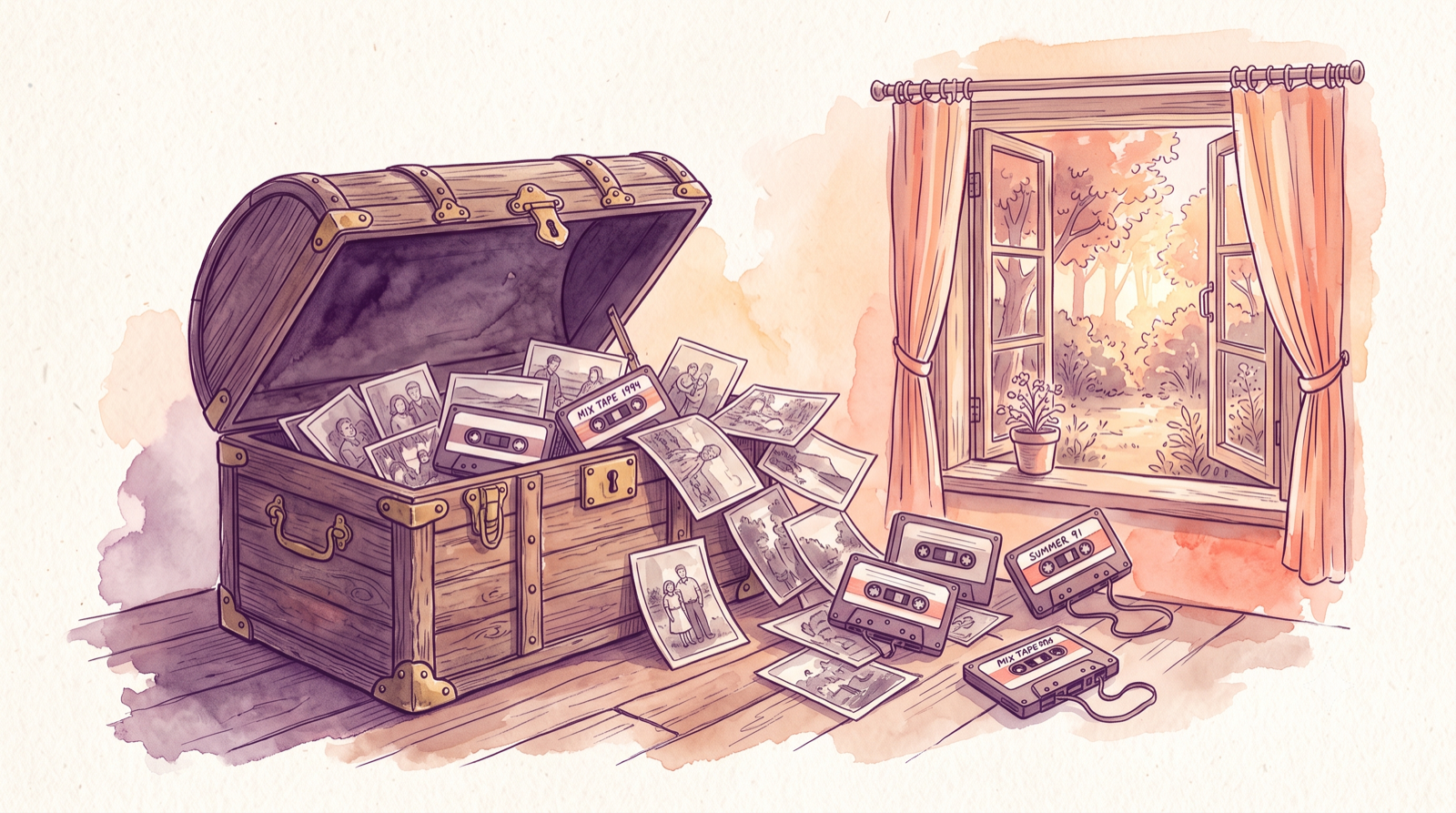
You've spent an afternoon getting your dad to finally talk about his childhood. You've narrated forty old photographs, name by name, before anyone forgets who's in them. You've uploaded voicemails from a grandparent who's no longer here. It's real work, and it's irreplaceable — there's no redoing the interview once someone's gone.
Now ask yourself a question most people never think to ask: what happens to all of that if the company behind the app stops paying its bills?
It's not a hypothetical
Apps shut down. Companies get acquired and "sunset" the product nobody was using enough to justify keeping alive. Startups run out of runway. None of that is a knock on any one service — it's just how software companies work, and family-memory apps are software companies, however warmly they're marketed. The tech industry is full of well-loved tools that simply stopped existing one day, sometimes with weeks of warning, sometimes with none.
The difference with a family-memory platform is what's at stake. If a to-do list app shuts down, you lose a to-do list. If the place holding your grandmother's voice shuts down, you may lose the only recording of it that exists anywhere.
The one question that actually matters
Before you trust any platform with things you can never record again, there's a single practical test: can you get everything back out, right now, in a format you can actually open and use elsewhere — without asking anyone's permission?
That's what "data portability" means, stripped of the jargon. Not "is there a support ticket you could file," not "in theory, if you emailed us." Can you, today, click a button and walk away with your photos, recordings, and transcripts in formats any computer can open?
Plenty of apps are quietly built the other way: your memories go in, but they only really come back out through the app itself, in whatever shape the app decides. That's fine right up until the app isn't there anymore.
How MemoryJam handles this
MemoryJam is built as a processing and enhancement layer for your memories, not a vault that owns them. Your archive — photos, narrations, transcripts, everything — can be exported at any time as a ZIP archive or a browsable HTML export you can open in any browser, no MemoryJam account required to view it.
That cuts both ways, deliberately: MemoryJam also doesn't ask to be your only copy. It's honest that it isn't a backup service — you should still keep your original photos and recordings somewhere else too, the same way you would with any tool that touches irreplaceable files. The goal isn't to be the one place your memories live; it's to be a safe place to make them richer, that you can always walk away from with everything intact.
What to check before you commit years of memories to any platform
- Is there a visible export option, or do you have to search for it (or ask)?
- What format do you get back — something standard (ZIP, common image/audio formats, plain HTML) or something proprietary you'd need that company's software to open?
- Does exporting cost extra, require a support request, or only happen if you cancel?
- Does the company say, anywhere, what happens to your data if they shut down? Silence on this is itself an answer.
None of this means don't trust anyone. It means treat "can I get my memories back out" as a basic feature to check for — the same way you'd check if a photo storage service lets you download your originals before you upload a decade of photos to it.
Explore MemoryJam → — built so your memories are always yours to take with you, in formats you can open anywhere.
Frequently asked questions
What is data portability, in plain terms? The ability to take your own data — photos, recordings, documents — out of a service in a usable, standard format, at any time, without needing the company's permission or ongoing goodwill.
Why does this matter more for family memory apps than other software? Because the content is often irreplaceable. You can switch to-do apps without losing anything real. You can't re-record a conversation with someone who has since passed away.
Does MemoryJam let me export my whole archive? Yes — your archive can be exported as a ZIP file or a browsable HTML export at any time, viewable without needing a MemoryJam account.
Is MemoryJam a backup service? No, and it doesn't claim to be. It's a processing and enhancement tool for your memories — keep your original photos and recordings elsewhere too, the same way you'd back up anything precious in more than one place.
How do I check if another app has real data portability? Look for a visible, no-questions-asked export feature, check what file format it produces, and see whether the company states anywhere what happens to your data if the service ever closes.
Already narrating old photographs? See What to Do With Old Family Photos No One Wants. Preserving a voicemail from someone you've lost? Start with How to Save a Voicemail Forever. Curious what it actually looks like to bring recordings in and take them back out again? See Working With Existing Recordings.