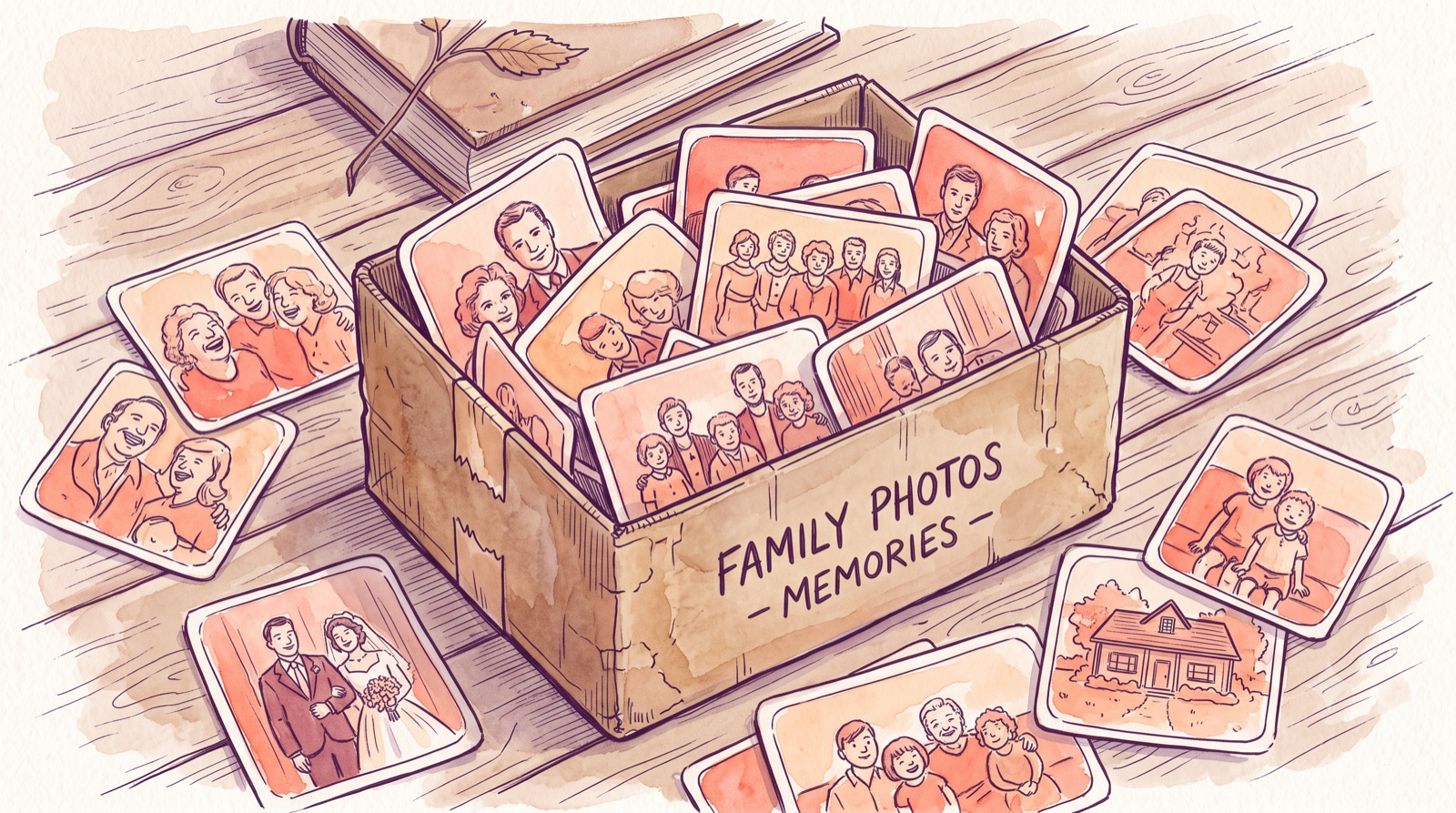
If you're holding a box of old family photos that no one seems to want, you already know the strange weight of it. Throwing them away feels like throwing away people. Keeping them means storing boxes you'll never really look at. And half the faces are strangers no one can name anymore.
You're not being heartless for wondering what to do. This is one of the quiet, hard jobs that often lands on us when a parent or grandparent dies. Here are your options — practical, and without the guilt.
First: don't bin them in a hurry
Whatever you decide, give it a beat. Once photos are gone, they're gone — and the one you toss today is the one a cousin or future grandchild would have treasured. You don't have to keep everything. You just don't have to decide it all in an afternoon.
Option 1: Identify what you can — while you still can
Before anything else, see what's salvageable as knowledge. Sit down with the oldest relatives you have and go through the unknowns together. Names, places, and dates live in people's heads, not the prints — and that knowledge expires. Even a quick phone call naming a few faces is worth more than the photos themselves.
Option 2: Digitize the keepers
You don't need to keep the physical box to keep the memories. Scan the ones that matter — see How to Digitize Old Photos for the fastest ways — and you can let the paper go while keeping the images safe, searchable, and shareable forever.
Option 3: Capture the story before the face is forgotten
A scan saves the image, but not who they were. For the photos that still have a story attached, record it. MemoryJam's Photo Narrator lets you talk over a photo — name the faces, tell the tale — and turns it into a short narrated keepsake. It's the difference between leaving behind "a box of strangers" and leaving behind a family history. (First few photos are free, no sign-up.)
Option 4: Share them with the wider family
What's clutter to you may be treasure to a cousin, niece, or distant relative tracing the family tree. Digitize and share a private album — often someone, somewhere, desperately wants exactly these.
Option 5: Donate the historical ones
Old photos of places, streets, workplaces, and events have real value to others:
- Local history groups, libraries, and archives often welcome photos of the area.
- Genealogy communities (and "photo rescue" groups online) reunite found photos with descendants.
- Schools, churches, or clubs may want images of their own past.
Option 6: Let go, respectfully
When you've identified, digitized, and rehomed what you can, it's genuinely okay to let the rest go. You've preserved what mattered — the faces, names, and stories. Recycling the leftover paper isn't discarding your family; it's releasing the packaging now that you've kept what's inside.
The guilt-free path, in short
- Identify what you can with older relatives.
- Digitize the keepers.
- Narrate the ones with stories (Photo Narrator).
- Share with family and donate the historical ones.
- Let the rest go, knowing the memories are safe.
Narrate a photo with Photo Narrator → — capture who they were before the box goes.
Frequently asked questions
What should I do with old family photos no one wants? Identify the people while older relatives can still help, digitize and narrate the ones that matter, share them with the wider family, donate historically interesting ones to local archives, and then it's okay to let the rest go.
Is it wrong to throw away old family photos? No — especially once you've digitized and recorded the ones with meaning. Preserving the image and the story matters far more than keeping fading paper.
What can I do with hundreds of old family photos? For large volumes, use a scanning service to digitize in bulk (see How to Digitize Old Photos), then keep the digital copies and rehome or recycle the prints.
Where can I donate old family photos? Local history societies, libraries, and archives; genealogy and "photo rescue" communities online; and relevant schools, churches, or clubs.
Digitizing and storing the ones you keep? What Happens to Your Memories If the App Disappears is worth reading before you pick where.